
This sticky buns recipe uses rich brioche dough and a homemade honey-brown sugar caramel to create soft, buttery sticky buns that feel straight out of a bakery, yet are made entirely from scratch in a home kitchen. Each roll bakes directly in the caramel and is finished upside down so the goo drapes over every swirl. These are classic, old fashioned sticky buns, perfect for Christmas breakfast, holiday brunch, or anytime you need sweet breakfast rolls for a crowd. Prep time: about 45 minutes active. Rise and chill time: overnight. Bake time: 35-40 minutes. Total time: overnight. Yield: 8 large sticky buns.

Key Takeaways
- This sticky buns recipe uses rich brioche dough and homemade caramel for soft, buttery rolls.
- The process requires planning ahead, with overnight rise and chill time to enhance flavor and texture.
- Enjoy layered flavors of butter, cinnamon, and deep caramel sweetness, making these buns perfect for holiday gatherings.
- Key ingredients include all-purpose flour, active dry yeast, eggs, and unsalted butter for optimal results.
- Serve warm and store properly; these sticky buns freeze well for future festive occasions.
Why these sticky buns are worth the wait
Sticky buns are not an everyday bake, and that is exactly why they matter.
I love sticky buns because they slow everything down. They require you to plan ahead, to start the night before, and to trust the process. There is something deeply comforting about that rhythm, especially during the holidays when everything else feels rushed. These are the buns you make when you want to wake your family with the amazing smell of cinnamon and dough!
If you love our Perfect Pillowy Soft Cinnamon Rolls, think of these sticky buns as their richer, more indulgent cousin, built on the same from-scratch, enriched dough but finished with a baked-in caramel instead of frosting.
What makes this sticky buns recipe different is the foundation. Brioche dough is not just richer, it is stronger. The eggs and butter create a dough that can rise high, hold layers, and still stay tender under a generous amount of caramel. Many sticky bun recipes collapse into dense spirals once the goo is added. Brioche prevents that.
The caramel itself is another place where patience pays off. Cooking the sugar gently before baking allows it to dissolve completely. That means no grainy texture, no hard candy bottom, and no burnt bitterness. Instead, you get a smooth, glossy caramel that soaks into the buns as they bake.
These are the kinds of homemade sticky buns that make people linger at the table. The ones that feel like a gift, not just breakfast.
For mornings when you want something warm and bakery-style but less hands-on, our Apple Fritter Bread is another favorite that delivers cozy spice and big flavor without rolling or shaping dough.
Jump to:
Why you'll love this sticky buns recipe
You will love this recipe because it respects your time, your ingredients, and your effort. Oh, and your family will LOVE them! Trust me.
This is not a sticky buns recipe that asks you to rush through steps or rely on shortcuts. Instead, it teaches you how enriched dough works and why taking things slowly leads to better results. The overnight chill is not a burden. It is a gift. It gives you flexibility and confidence, especially on holiday mornings.
The flavor is layered, not flat. You taste butter first, then warmth from cinnamon, then that deep caramel sweetness from brown sugar and honey. The texture is equally intentional. Soft and pillowy inside, slightly crisp at the edges, and soaked just enough with caramel to feel indulgent without being heavy.
This recipe is also forgiving. If your kitchen is noisy with kids or your schedule gets interrupted, the dough can handle it. Brioche is resilient when treated kindly, and this recipe is written to guide you, not test you.
Most of all, you will love how it feels to serve these. Classic sticky buns like this communicate care. They say you planned ahead. You made something with intention. And that is a beautiful thing to bring to the table.

Ingredients you need and why
Understanding ingredients is one of the fastest ways to grow as a baker, and this sticky buns recipe is a great teacher.
- All-purpose flour: Provides the right balance of strength and tenderness. Sticky buns need structure to rise tall, but softness so they stay pull-apart tender.
- Active dry yeast: Reliable fermentation is crucial in enriched doughs. Blooming the yeast ensures it can handle the fat and sugar in this recipe.
- Eggs: Eggs add richness, but they also strengthen the dough. Their proteins help trap gas during fermentation, leading to a lighter bun.
- Salted butter: Butter tenderizes the dough by coating flour proteins, limiting excessive gluten development while adding deep flavor. Adding it gradually ensures proper emulsification. I ALWAYS use salted butter - it really pulls out the butter flavor and elevates the entire recipe.
- Light brown sugar: The molasses content adds moisture and depth while helping the filling melt evenly.
- Honey: Honey is hygroscopic, meaning it attracts moisture. This helps keep the caramel smooth and prevents crystallization.
- Heavy cream: Cream balances the sugar concentration in the caramel so it stays pourable rather than stiff.
- Cinnamon: Adds warmth and depth without overpowering the caramel flavor.
- Pecans (optional): Add texture and contrast, creating classic pecan sticky buns without overpowering the dough. I would NEVER skip pecans, but my husband and kids don't have the same passion for pecans as I do...
This thoughtful balance of ingredients is what gives these bakery-style sticky buns their classic, old fashioned flavor.
How to make sticky buns
This recipe is best approached as a process rather than a quick bake.
Blooming the yeast first confirms it is active before adding expensive ingredients. This is especially important in enriched doughs, where fat slows fermentation.
When mixing the dough, order matters. Eggs go in early to build structure. Butter is added gradually so it fully emulsifies. Rushing this step is the most common reason brioche fails. The dough should transform slowly from shaggy to silky.
The first rise builds volume. The overnight chill builds flavor and control. Cold dough is easier to roll evenly, slice cleanly, and shape without squeezing out filling.
Cooking the caramel before baking ensures the sugar is fully dissolved, preventing grainy or burned results. Spreading it directly into the pan allows the buns to bake in the caramel so flavor absorbs upward.
The final proof relaxes the dough and creates lift. Baking sets the structure. Inverting while warm allows gravity to coat every bun evenly in glossy caramel.
Reference the recipe card for a step by step guide.

Tips, tools, and troubleshooting
Brioche behaves differently than lean doughs, and understanding that difference builds confidence quickly.
Before troubleshooting specifics, remember this: enriched dough is meant to feel soft, rich, and supple. Trust the process.
Tips and techniques
- Gluten develops during mixing, not kneading by hand
Gluten is what gives dough strength and structure. It is the network that traps air created by the yeast and allows the buns to rise tall instead of spreading flat.
In brioche dough, gluten develops during mixing, especially in a stand mixer, because the dough is too soft and rich to knead effectively by hand. The eggs and butter slow gluten formation, which is why this dough needs longer mixing time than lean bread doughs. This is why patience matters here. Fully developed gluten means your sticky buns will hold their shape, support the caramel, and still stay soft and tender once baked. - Chilling improves flavor and dough handling
The overnight chill is doing two important jobs at once. First, it develops flavor. Slow fermentation gives the dough depth and complexity that you simply cannot get from a rushed rise. Second, it firms up the butter, which makes the dough much easier to roll, slice, and shape the next day. Warm brioche dough is soft and stretchy, which sounds nice until it starts sticking, tearing, or squeezing out filling. Chilled dough behaves. It rolls cleanly, cuts neatly, and creates those beautiful spiral layers you expect in classic sticky buns. - Tight rolling creates defined layers and even baking
Rolling the dough tightly is not about making it pretty. It is about structure.
A snug roll keeps the layers of dough and filling close together so they bake evenly. Loose rolling allows gaps to form, which leads to uneven baking, leaking filling, and buns that fall apart when inverted. Think of it like rolling a sleeping bag. Firm but gentle pressure creates neat layers that hold their shape and bake into that classic spiral. - Slight cooling before inversion prevents caramel seizing
Inversion simply means flipping the pan of sticky buns upside down onto a serving platter so the caramel that baked underneath runs over the top of the buns.
Caramel is very sensitive to temperature. When it is too hot, it is dangerously loose. When it is too cold, it stiffens and sticks to the pan. Allowing the buns to cool for just 5-10 minutes hits the sweet spot. At that point, the caramel is still fluid enough to flow, but stable enough to release cleanly from the pan. This step ensures the goo coats the buns instead of staying behind.
Tools I recommend
- Kitchen Aid stand mixer with a dough hook for consistent gluten development. I am partial to by Kitchen Aid, but any good stand mixer will do.
- I alway use a heavy-bottom saucepan. This really helps to avoid scorching the sugar.
- Metal baking pan for even caramelization and baking.
- Offset spatula for spreading caramel gently - it just makes life so much easier.
Troubleshooting
- Dense buns:
Dense sticky buns are almost always a proofing issue, not a dough problem. Yeast needs enough time to produce gas and lighten the dough. Instead of watching the clock, look for visible puffiness and a soft, airy feel. Underproofed dough bakes up heavy, no matter how good the recipe is. - Leaking filling:
Filling leaks when the dough is rolled too loosely or the seam is not sealed well. Sugar melts quickly in the oven, and any gaps give it a path to escape. Rolling snugly and pinching the seam closed keeps the filling where it belongs and helps the buns bake evenly. - Hard caramel:
Caramel texture is all about temperature. If it is cooked too long or allowed to cool completely before inversion, it can seize and stick to the pan. Inverting while the caramel is still warm allows it to flow smoothly over the buns instead of hardening underneath. - Flat buns:
Flat buns usually point back to how the butter was added. In brioche dough, butter needs to be incorporated slowly after gluten has begun to form. Adding it too early or too fast can weaken the dough structure, making it difficult for the buns to rise and hold their shape.
This same idea of cooking sugar gently before using it shows up in our Swiss Meringue Buttercream Frosting, where dissolving sugar properly is the key to a smooth, bakery-quality finish.
If caramel feels intimidating, our Homemade Caramel Sauce walks through sugar behavior step by step and helps build confidence with stovetop caramel techniques that translate directly to this recipe.
Variations, substitutions, and storage
Sticky buns are generous by nature, and this recipe adapts beautifully when changes are made thoughtfully.
Understanding sugar and fat ratios matters here. Altering them changes texture, not just sweetness.
Variations and substitutions
For classic pecan sticky buns, increase pecans or leave them whole. For a nut-free version, omit them entirely. A pinch of nutmeg or cardamom adds warmth without overpowering the caramel flavor. Avoid reducing sugar or fat, as these control moisture, tenderness, and caramelization.
Serving and storage
Serve warm for best texture. Store covered at room temperature for one day or refrigerate up to three days. Reheat gently so the caramel softens again. These freeze exceptionally well after baking and reheat beautifully, making them ideal sweet breakfast rolls for a crowd.

Recipe FAQs
These FAQs are intentionally detailed. Sticky buns involve enriched dough, sugar science, and timing, and understanding the why behind each step builds confidence fast.
Brioche is enriched with eggs and butter, which gives it both tenderness and strength. Sticky buns bake directly in caramel, which is heavy. Basic sweet doughs often collapse or become dense under that weight. Brioche holds its shape, rises taller, and stays soft even after soaking up caramel.
Technically, yes. Practically, it changes everything. Chilling improves flavor, makes the dough much easier to roll, and prevents the filling from squeezing out. Warm brioche dough is difficult to handle and more likely to tear. If you are baking for guests or a holiday morning, the overnight chill is one of the biggest confidence boosters in this recipe.
Cooking dissolves the sugar completely before it ever hits the oven. This prevents grainy texture, scorched sugar, and hard candy bottoms. It is a classic bakery technique that creates smooth, glossy caramel instead of unpredictable results.
The dough should be smooth, elastic, and slightly tacky but not sticky. It should stretch without tearing and pull away from the bowl. Because of the butter, brioche takes longer to develop gluten than lean doughs. Rushing this step leads to dense buns.
They should look visibly puffy and light. When gently pressed, the dough should slowly spring back but not collapse. If it snaps back immediately, it needs more time. Underproofed sticky buns bake up dense.
Caramel behaves differently based on temperature. Warm caramel flows easily and coats the buns. Cold caramel seizes and sticks to the pan. Inverting while warm ensures every bun gets evenly coated.
No. Brioche dough is naturally soft because of the butter and eggs. That softness is what creates a tender crumb. Chilling firms it up and makes it manageable. Resist the urge to add extra flour.
You can, but metal pans conduct heat more evenly and caramelize better. Glass and ceramic tend to bake more slowly and can leave caramel lighter in color. If using glass, watch closely and expect slightly longer bake time.
Sticky buns freeze beautifully. Bake fully, cool completely, then freeze up to one month. Reheat gently, covered, until warm and gooey again. This makes them ideal for holiday mornings when time is limited.
Yes, and this is a great recipe for it. Measuring ingredients, sprinkling filling, and arranging buns in the pan are all kid-friendly steps. Baking together makes the slower pace of this recipe even more meaningful.
Recipe
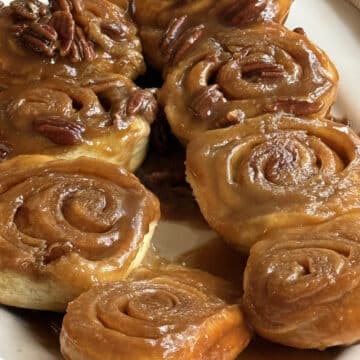
Sticky Buns Recipe
Equipment
- 1 stand mixer with dough hook
- 1 large mixing bowl (if mixing by hand or for transferring dough)
- Measuring Cups and Spoons
- 1 Digital Thermometer (for checking water temperature)
- 1 Rubber Spatula
- 1 Small saucepan (heavy-bottomed preferred)
- 1 whisk
- 1 9x13-inch metal baking pan
- 1 Rolling Pin
- 1 Sharp knife or bench scraper
- 1 Pastry Brush (for egg wash)
- 1 Plastic Wrap or Clean Kitchen Towel
- 1 Cooling Rack
- 1 Large serving platter (for inverting sticky buns)
Ingredients
For the Dough
- 4 cups 480 g all-purpose flour
- 4 teaspoon active dry yeast
- 2 tablespoon 25 g sugar
- 1 tablespoon salt
- ⅔ cup 160 ml warm water (about 110°F / 43°C)
- 5 large eggs
- 11 tablespoon 155 g salted butter, room temperature, cut into pieces
For the Sticky Buns
- ¾ cup 150 g light brown sugar
- 1 tablespoon ground cinnamon
- 1 cup 100 g pecan halves, toasted and chopped (optional)
For the Goo
- ¾ cup 168 g salted butter
- 1 ½ cups 345 g light brown sugar
- ⅓ cup 110 g honey
- ⅔ cup 160 g heavy cream
- ¼ teaspoon salt
For the Egg Wash
- 1 large egg
Instructions
- Bloom the yeast by warming the water to about 110°F, warm to the touch but not hot. Stir in the sugar until dissolved, sprinkle the yeast over the top, and let sit for 5-10 minutes until foamy and bubbly. If the mixture does not foam, discard and start over with fresh yeast.4 teaspoon active dry yeast, 2 tablespoon 25 g sugar, ⅔ cup 160 ml warm water (about 110°F / 43°C)
- In a large mixing bowl or stand mixer fitted with a dough hook, combine the flour and salt. Add the yeast mixture and eggs, mixing on low speed until the dough begins to come together.4 cups 480 g all-purpose flour, 1 tablespoon salt, 5 large eggs
- Increase to medium speed and knead for about 5 minutes, until the dough becomes smooth and elastic.
- Add the butter gradually, a few pieces at a time, mixing until each addition is fully incorporated before adding more. Continue mixing until the dough is silky and smooth, about 10-12 minutes total.11 tablespoon 155 g salted butter, room temperature, cut into pieces
- Transfer the dough to a lightly greased bowl, cover, and let rise in a warm place until doubled in size, about 1½-2 hours.
- Gently deflate the dough, cover again, and refrigerate overnight for best flavor and easier handling.
- Make the caramel goo by melting the butter in a saucepan over medium heat. Stir in the brown sugar, honey, and salt, and cook, stirring constantly, until the mixture begins to bubble and the sugar is fully dissolved.¾ cup 150 g light brown sugar, ¾ cup 168 g salted butter, ⅓ cup 110 g honey, ¼ teaspoon salt
- Remove the saucepan from the heat and carefully whisk in the heavy cream until smooth. Set aside to cool slightly.⅔ cup 160 g heavy cream
- Butter a 9x13-inch baking pan and spread the caramel goo evenly across the bottom. Sprinkle the chopped pecans evenly over the goo if using.1 cup 100 g pecan halves, toasted and chopped (optional)
- On a lightly floured surface, roll out half of the chilled dough into a rectangle about 12x16 inches.
- In a small bowl, mix together the brown sugar and cinnamon, then sprinkle the mixture evenly over the rolled dough.1 tablespoon ground cinnamon, 1 ½ cups 345 g light brown sugar
- Roll the dough up tightly from the long side and pinch the seam to seal.
- Slice the roll into 8 equal pieces and arrange them cut-side up in the prepared pan.
- Cover the pan and let the buns rise until puffy and nearly doubled in size, about 1 hour.
- Preheat the oven to 350°F (175°C).
- Brush the tops of the buns with egg wash.1 large egg
- Bake for 35-40 minutes, until the buns are deep golden brown and the caramel is bubbling.
- Let the buns cool in the pan for 5-10 minutes, then carefully invert onto a serving platter so the caramel runs over the top.
- Serve warm.
Notes
Nutrition

What to bake next
If sticky buns are the showstopper on your table, our Pumpkin Muffins are an easy, cozy bake that still feels homemade and special.
For Christmas morning specifically, our Cinnamon Rolls with Heavy Cream are another beloved holiday bake that pairs beautifully with sticky buns when feeding a crowd.
If you make this sticky buns recipe, I would love to hear who you baked them for. Leave a comment, rate the recipe, and save it for your next holiday brunch or special morning. Recipes like this are more than breakfast. They are a way to slow down, serve well, and gather people around the table.
About Kendra Boettner
Hi, I'm Kendra, wife, mom of three, and the baker behind The Baker's Table. After 20+ years baking at home, including time working in professional kitchens, these are some of my favorite recipes I've learned along the way.
🧁 Want to see more? Join me on Instagram, Facebook, and Pinterest
1️⃣ My 'The Best No Bake Oatmeal Cookie" was my #1 recipe in 2025! Easy and kid friendly!
📋 Here are Kendra's favorite recipes
🍪 Or start with some of our readers' favorites:
- The Best Easy Pie Crust Recipe (Flaky and Foolproof)
- The Best Homemade Brownies (Chewy, Fudgy!)
- Lemon Meringue Bars with Swiss Meringue
- Cake Pucks Made Easy (Cake Pops without the Sticks)
- No-Bake Chocolate Mousse Pie with Oreo Crust
📋 Browse all of my recipes
🔗 The Baker's Table is Featured in:
🔗 Visit the About Me page to learn more about Kendra, Eric, and The Baker's Table!


Comments
No Comments