
This soft gingerbread cake recipe with vanilla cream sauce is perfectly spiced, wonderfully moist, and served warm with a rich vanilla bean cream sauce. It is an easy from scratch winter dessert that's just as welcome on a chilly January evening as it is on your Christmas dessert table. This cake has a soft, tender crumb that's moist without feeling heavy or dense.

Quick Recipe Highlights
If you're looking for a gingerbread cake recipe that fills your home with the comforting aroma of warm spices and brings everyone back to the table for seconds, this is one you'll find yourself baking all winter long.
- This gingerbread cake is easy to make from scratch and perfect for winter gatherings.
- The secret to its moistness is adding hot water to the batter, creating a tender crumb.
- Serve it warm with a homemade vanilla bean cream sauce for a dessert experience.
- This cake remains delicious for days, making it ideal for make-ahead holiday treats.
- Try variations like whipped cream, powdered sugar, or chopped pecans to customize your cake.
Jump to:
A Gingerbread Cake You'll Bake All Winter Long
There are some recipes that immediately make you think of Christmas. Gingerbread cake is one of them.
The smell of warm cinnamon, ginger, cloves, and rich molasses drifting through the house instantly brings back memories of holiday baking with family. It feels nostalgic in the very best way.
While the gingerbread cake is delicious on its own, the warm vanilla bean cream sauce is what transforms it from an everyday snack cake into a dessert worthy of holidays, family gatherings, and Sunday dinners. The molasses gives this cake depth rather than overwhelming sweetness, while the vanilla bean cream sauce lets you decide just how indulgent to make each serving.
But somewhere along the way, I realized I was saving this cake for one month out of the year. The truth is, this gingerbread cake is far too good to enjoy only during the holidays. Once Christmas decorations are packed away, we're still left with chilly evenings, family dinners, church potlucks, and neighbors who could use a homemade dessert. This cake fits every one of those occasions beautifully.
Now it has become one of our favorite winter desserts.
It is simple enough to bake on a weeknight, yet special enough to bring to a family gathering. There is no stacking layers, no frosting to decorate, and no complicated techniques. Just a tender, deeply spiced cake served warm with the most incredible vanilla bean cream sauce.
One part of this recipe surprises almost everyone the first time they make it.
After you've mixed in the dry ingredients, you'll slowly stir in the very hot water. At first glance, the batter may seem far too thin for a cake. If you've only baked cakes with thicker batters, you might wonder if something went wrong.
Don't panic. This is exactly how the batter is supposed to look.
That extra liquid is one of the secrets to an incredibly soft, moist gingerbread cake. As the cake bakes, the flour fully hydrates while the moisture creates a wonderfully tender crumb that stays soft for days.
The temptation can be to add more flour to "fix" the batter, but resist the urge. Adding extra flour will change the texture of the finished cake, making it heavier and drier than intended.
Trust the recipe, pour the batter into the pan, and let the oven do its work. You'll be rewarded with one of the softest gingerbread cakes you've ever made.
If you enjoy baking during the cooler months, you'll also love my Perfect Pillowy Soft Cinnamon Rolls for slow Saturday mornings or these Pumpkin Muffins when you need an easy breakfast everyone can grab on the way out the door. And if you're looking for even more desserts to share with family and friends, be sure to browse our growing collection of homemade cakes.
Why You'll Love This
This is the kind of recipe that quietly becomes a family tradition.
- Soft, tender crumb that stays wonderfully moist thanks to the molasses and hot water.
- Rich gingerbread flavor with cinnamon, ginger, and cloves in every bite.
- Easy 9x13 cake with no layers or decorating required.
- Homemade vanilla bean cream sauce that soaks into every slice.
- Perfect for Christmas, New Year's, or any winter evening.
- Even better the next day, making it a wonderful make ahead dessert.
- Simple ingredients you probably already have in your pantry.
If you're bringing dessert to a church potluck or family gathering, this cake travels just as well as my Black Forest Cake or Millionaire Shortbread.

Ingredients You'll Need
You'll find the complete ingredient list and measurements in the recipe card below, but I always like to explain why certain ingredients matter. Understanding what each one does makes baking feel much less intimidating, and it helps you troubleshoot if something doesn't turn out exactly as expected.
Unsulphured Molasses
Molasses is what gives gingerbread its unmistakable flavor and beautiful dark color. It also adds moisture, helping create that soft crumb we're after. Be sure to use unsulphured molasses, not blackstrap molasses. Blackstrap has a much stronger, more bitter flavor that can overpower the cake.
Butter
Butter brings richness while helping create a tender texture. Make sure it's softened to room temperature so it creams properly with the sugar. This step creates tiny air pockets that help the cake bake up light and tender. I almost always reach for salted butter when I bake and simply adjust the added salt in the recipe to compensate. It's a personal preference I've developed over years of baking because I think salted butter gives baked goods a richer, more well-rounded flavor.
Granulated Sugar
Besides adding sweetness, sugar works together with the butter during creaming to give the cake a softer texture.
Egg
One large egg gives the batter structure so each slice holds together while still remaining tender.
All Purpose Flour
Flour provides the structure for the cake, giving it the strength to rise while still baking up soft and tender. This recipe uses all-purpose flour because it strikes the perfect balance. It has enough protein to provide structure without making the cake heavy or chewy, resulting in a light, tender crumb.
I almost always reach for King Arthur Flour because it's the brand I trust most. I love that it's unbleached, never bromated, and naturally aged, and I appreciate knowing it's made with simple, quality ingredients. Over the years, I've also found it to be incredibly consistent from one bag to the next. That consistency matters when you're baking. It allows me to test recipes with confidence, knowing the flour will perform the same way every time, so you can expect reliable results in your own kitchen.
I also recommend spooning and leveling your flour instead of scooping directly from the bag. Scooping compacts the flour into the measuring cup, which can add more flour than the recipe calls for. Even a little extra flour can leave your cake dry instead of soft and moist.
Baking Soda
Molasses is naturally acidic, and baking soda reacts with it to help the cake rise beautifully while keeping the crumb light.
Cinnamon, Ginger, and Cloves
These three spices create the classic gingerbread flavor everyone loves. The cinnamon adds warmth, the ginger provides gentle spice, and the cloves give the cake its rich depth.
Very Hot Water
Don't let this ingredient surprise you. The very hot water (but not boiling) does much more than thin the batter. It helps dissolve the molasses so it blends more evenly throughout the cake, allowing the warm spices to shine while creating a smooth, uniform batter. The added moisture also fully hydrates the flour, resulting in an incredibly soft, tender crumb that stays moist for days. When you stir it in, the batter will become much thinner than a typical cake batter. That's exactly what you want, so resist the urge to add more flour. Trust the process, and you'll be rewarded with one of the softest gingerbread cakes you've ever baked.
Orange Juice
Just a little orange juice brightens the rich molasses flavor without making the cake taste citrusy. The orange juice doesn't make the cake taste citrusy. It adds a subtle brightness that complements the molasses without making the cake taste like orange.
Heavy Cream, Butter, Sugar, and Vanilla Bean Paste
These simple ingredients come together to make one of my favorite dessert sauces. The vanilla bean paste adds beautiful little flecks of vanilla while giving the sauce a deeper flavor than traditional vanilla extract.

How to Make It
This recipe comes together surprisingly quickly, making it perfect for busy afternoons when you still want something homemade on the dessert table.
Start by preheating your oven to 350°F and greasing a 9x13-inch baking dish. Cream the softened butter and sugar together until the mixture becomes lighter in both color and texture. This step is worth taking your time on because it creates a softer finished cake.
Mix in the beaten egg, followed by the molasses. At this stage the batter will become thick, glossy, and beautifully dark.
In a separate bowl, whisk together the flour, baking soda, cinnamon, ginger, cloves, and salt before gently stirring the dry ingredients into the molasses mixture. Mixing the dry ingredients first helps distribute the spices and baking soda evenly throughout the cake.
Now comes the step that surprises nearly everyone. Slowly stir in the very hot water and orange juice. The batter will become extremely thin. BUT - don't add more flour. And take it from me; don't assume you've done something wrong. Resist the urge to "fix" it, and trust the process. That thin batter is exactly what you want. The result will be one of the softest cakes you'll ever bake.
Pour the batter into your prepared pan and bake for 20 to 25 minutes, or until a toothpick inserted into the center comes out with just a few moist crumbs. A perfectly clean toothpick usually means the cake has baked a little too long.
While the cake is in the oven, prepare the vanilla bean cream sauce. As the butter melts and the sauce gently boils, your kitchen starts smelling every bit as cozy as you'd hope a winter dessert would.
Serve generous slices while the cake is still warm, topped with fresh whipped cream and plenty of warm vanilla bean cream sauce. No one is going to complain if you add an extra spoonful of sauce.

Tips for Making the Best Gingerbread Cake
I've made enough cakes over the years to know that it's often the little details that make the biggest difference. These are the tips I keep in mind every time I make this gingerbread cake, and they'll help you get the same soft, moist results in your own kitchen.
Measure your flour correctly.
One of the easiest ways to end up with a dry cake is by adding too much flour. Instead of scooping your measuring cup directly into the bag, spoon the flour into the cup and level it off with the back of a knife. It only takes a few extra seconds, but it makes a noticeable difference in the finished texture.
Use room temperature ingredients.
Softened butter and a room temperature egg combine more easily, creating a smooth batter that bakes more evenly. Cold ingredients don't cream together as well and can leave you with a denser cake.
Don't be alarmed by the thin batter.
After adding the very hot water, your batter will be much thinner than most cake batters. That's exactly how it should look. Resist the temptation to add more flour. The extra moisture is what gives this cake its incredibly soft, tender crumb. I've made this cake enough times to know the thin batter can look wrong, but trust it. That's exactly what creates its incredibly soft, moist crumb.
Don't overbake.
Start checking the cake around the 20-minute mark. A toothpick inserted into the center should come out with a few moist crumbs attached. If it comes out completely clean, the cake has likely baked a little too long. Remember, the cake will continue cooking slightly as it cools in the pan.
Serve it warm.
While delicious at room temperature, I think this gingerbread cake is at its very best served slightly warm with the cream sauce. The warm sauce soaks into the cake, making every bite rich, and incredibly comforting.
Variations
One of the things I love most about this gingerbread cake is how easy it is to make it your own. Here are a few simple ways to change it up while keeping that classic cozy flavor.
Add fresh whipped cream.
A dollop of lightly sweetened homemade whipped cream balances the warm spices beautifully and makes every slice feel a little extra special.
Sprinkle with powdered sugar.
For a simple presentation, dust the cooled cake with powdered sugar just before serving.
Add chopped pecans.
A handful of toasted pecans adds a delicious crunch and pairs wonderfully with the warm spices and molasses.
Make it extra festive.
Garnish each slice with sugared cranberries or a sprinkle of orange zest for a beautiful holiday presentation.
Storage Instructions
If you happen to have leftovers, this cake stores beautifully.
Room Temperature: Cover the cake tightly and store it for up to 3 days.
Refrigerator: Store covered for up to 5 days. The vanilla bean cream sauce should always be refrigerated separately.
Freezer: Wrap individual slices tightly in plastic wrap, then place them in a freezer-safe container or bag. Freeze for up to 3 months. Thaw overnight in the refrigerator before reheating.
Reheating
Warm individual slices in the microwave for about 15 to 20 seconds. Reheat the vanilla bean cream sauce gently on the stovetop or in short intervals in the microwave until smooth and pourable. If the sauce thickens too much after refrigeration, stir in a splash of heavy cream while reheating until it reaches your desired consistency.

Frequently Asked Questions
Don't worry. The batter is supposed to be very thin after adding the hot water. The extra liquid hydrates the flour and creates the incredibly soft, moist texture that makes this cake so delicious. Resist the urge to add more flour.
I don't recommend it. Blackstrap molasses has a much stronger, more bitter flavor than regular unsulphured molasses and can overpower the warm spices in the cake. For the best flavor, stick with unsulphured molasses.
Absolutely! In fact, I think the flavor is even better the next day as the spices have more time to develop. Store the cake tightly covered and keep the vanilla bean cream sauce refrigerated separately until you're ready to serve.
Yes! This cake freezes wonderfully. Wrap individual slices tightly and freeze for up to three months. Thaw overnight in the refrigerator and warm slightly before serving with freshly reheated vanilla bean cream sauce.
Yes. The sauce can be made several days in advance and stored in an airtight container in the refrigerator. As it chills, it will thicken considerably. Simply reheat it gently, adding a splash of heavy cream if needed to return it to a smooth, pourable consistency.
Molasses is naturally acidic, which means it reacts with baking soda to create the lift this cake needs. Baking soda also helps neutralize some of the acidity in the molasses, giving the cake a balanced flavor and a beautifully tender crumb. Using baking powder instead would change both the texture and the flavor, so I don't recommend making that substitution.
There are a few reasons this cake stays incredibly moist. The molasses naturally attracts and holds moisture, while the hot water fully hydrates the flour before baking. Together, they create a cake with a soft, tender crumb that stays fresh longer than many traditional cakes. Just be careful not to overbake it, as that's the quickest way to dry it out.
The two most common culprits are measuring too much flour or baking the cake too long. I always recommend spooning and leveling your flour instead of scooping directly from the bag, and begin checking for doneness around the 20-minute mark. The cake is ready when a toothpick comes out with a few moist crumbs attached. A completely clean toothpick often means it's slightly overbaked.
A homemade gingerbread cake delivers a richer flavor and a better texture than a cake mix ever could. Making it from scratch lets the deep molasses flavor and warm spices like cinnamon, ginger, and cloves really shine instead of relying on artificial flavorings. It also gives you control over every ingredient, so you know exactly what's going into your cake. Best of all, the batter comes together in just a few minutes using simple pantry staples, making the extra effort well worth it for a soft, moist gingerbread cake your family will remember.
Gingerbread cake gets its signature flavor from molasses, which gives it a richer, deeper taste and darker color than a traditional spice cake. While both use warm spices like cinnamon and ginger, spice cake usually relies on brown sugar or granulated sugar for sweetness. The molasses in gingerbread cake also helps create its soft, moist texture and classic holiday flavor.
For the best flavor, use unsulphured molasses. It has the rich, slightly sweet taste and deep color that give classic gingerbread cake its signature flavor. I don't recommend using blackstrap molasses because it's much more bitter and can overpower the warm spices, leaving the cake tasting harsh instead of balanced. If you're shopping at the grocery store, look for regular unsulphured molasses, such as Grandma's Original Molasses. It's my preferred choice for a soft, moist gingerbread cake with the classic flavor most people know and love.
Recipe
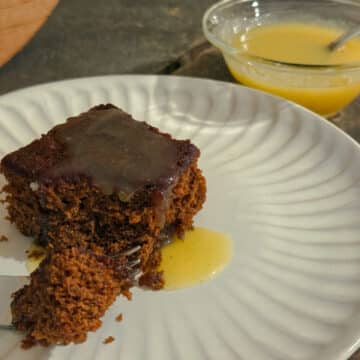
Gingerbread Cake Recipe with Vanilla Cream Sauce
Equipment
- 1 9x13 inch baking pan
- 1 large mixing bowl
- 1 Kitchen-Aid Mixer or electric hand mixer
- 1 whisk
- 1 Rubber Spatula
- 1 Measuring cups and measuring spoons
- 1 Medium Saucepan (for the vanilla bean cream sauce)
- 1 Cooling Rack (optional, but helpful)
Serving Size Adjustment
If needed, you can double or triple the serving sizes.
Unit Conversion
Selected US Customary or Metric Unit.
Ingredients
Gingerbread Cake
- ½ cup granulated sugar
- ½ cup salted butter softened
- 1 large egg beaten
- 1 cup unsulphured molasses
- 2½ cups all-purpose flour
- 1½ teaspoons baking soda
- 1 tablespoon ground cinnamon
- 1 tablespoon ground ginger
- 1 teaspoon ground cloves
- 1 teaspoon salt
- ¾ cup very hot water (but not boiling)
- ¼ cup orange juice
- Fresh whipped cream for serving
Vanilla Bean Cream Sauce
- 1 cup granulated sugar
- ½ cup butter
- 1 cup heavy whipping cream
- 1 tablespoon vanilla bean paste
Instructions
Gingerbread Cake
- Preheat the oven to 350°F. Grease a 9×13-inch baking pan with cooking spray or butter.
- In a large mixing bowl, cream together the butter and sugar until light and fluffy, about 2 to 3 minutes. Scrape down the sides and bottom of the bowl before adding the egg.½ cup granulated sugar, ½ cup salted butter
- Beat in the egg until fully incorporated, then mix in the molasses until smooth.1 large egg, 1 cup unsulphured molasses
- In a separate bowl, whisk together the flour, baking soda, cinnamon, ginger, cloves, and salt.2½ cups all-purpose flour, 1½ teaspoons baking soda, 1 tablespoon ground cinnamon, 1 tablespoon ground ginger, 1 teaspoon ground cloves, 1 teaspoon salt
- Add the dry ingredients to the wet ingredients and mix just until combined. Mix only until no dry streaks remain.
- Slowly stir in the very hot water (but not boiling) and orange juice until the batter is smooth. The batter will be thin, and that's exactly what you want.¾ cup very hot water (but not boiling), ¼ cup orange juice
- Pour the batter into the prepared baking pan and bake for 20 to 25 minutes, or until a toothpick inserted into the center comes out with a few moist crumbs attached.
- Allow the cake to cool for 5 to 10 minutes before serving.
Vanilla Bean Cream Sauce
- While the cake bakes, prepare the vanilla bean cream sauce.
- In a medium saucepan over medium heat, combine the sugar, butter, and heavy whipping cream.1 cup granulated sugar, ½ cup butter, 1 cup heavy whipping cream
- Cook, stirring occasionally, until the butter has completely melted.
- Bring to a gentle boil over medium heat, stirring frequently. Continue boiling for 3 to 5 minutes, stirring frequently.
- Remove the saucepan from the heat and stir in the vanilla bean paste.1 tablespoon vanilla bean paste
- Allow the sauce to cool slightly before serving. It will continue to thicken as it cools.
To Serve
- Top each slice of warm gingerbread cake with fresh whipped cream and generously spoon the warm vanilla bean cream sauce over the top.Fresh whipped cream
Notes
- Use unsulphured molasses. It has the rich, deep flavor that gives this gingerbread cake its classic taste. Blackstrap molasses is much more bitter and can overpower the warm spices.
- Don't be surprised by the thin batter. The combination of very hot water and molasses creates a loose batter that bakes into an incredibly moist, tender cake. Resist the urge to add extra flour or the finished cake may turn out dry.
- Measure your flour correctly. Spoon the flour into your measuring cup and level it off with a knife instead of scooping directly from the bag. Even a little extra flour can make a gingerbread cake dense instead of soft and moist.
- Mix the batter just until combined. Overmixing develops the gluten in the flour, which can create a tougher texture. Once the dry ingredients disappear, you're ready to pour the batter into the pan.
- Watch the baking time closely. Every oven bakes a little differently. Start checking a few minutes early and remove the cake when a toothpick comes out with a few moist crumbs. Overbaking is the quickest way to lose the soft texture that makes this gingerbread cake so special.
- Let the vanilla bean cream sauce cool slightly before serving. As it cools, it naturally thickens into a rich, pourable sauce that's perfect for spooning over warm slices of cake.
- This gingerbread cake tastes even better warm. If you're serving leftovers, warm individual slices for 10 to 15 seconds in the microwave before adding fresh whipped cream and the vanilla bean cream sauce. The spices become more aromatic, and the cake regains that fresh-from-the-oven texture.
- Make ahead tip: Bake the cake a day in advance if needed. Cover it tightly and store it at room temperature. Warm the cream sauce gently on the stovetop or in the microwave before serving for the best flavor and texture.
- Storage: Store the cake tightly covered at room temperature for up to 3 days or refrigerate for up to 5 days. Store the vanilla bean cream sauce separately in the refrigerator and reheat gently before serving.
- Freezing: Wrap the cooled cake tightly in plastic wrap and then aluminum foil. Freeze for up to 3 months. Thaw overnight in the refrigerator or at room temperature before warming and serving with freshly heated cream sauce.
Nutrition
If You Loved This Recipe...
This gingerbread cake recipe is everything people are searching for: moist, easy, made from scratch, and rich with classic molasses flavor.
Even if you've never made homemade gingerbread cake before, this recipe is straightforward and forgiving. This gingerbread cake works just as well as a simple snack cake with coffee as it does dressed up with vanilla bean cream sauce for dessert.
If you enjoy baking from scratch and filling your kitchen with homemade desserts your family will remember, here are a few more recipes I think you'll love next.
- Authentic Irish Apple Cake with Crème Anglaise is another old-fashioned dessert that's rich with warm spices and even better served with a homemade sauce.
- Easy Pumpkin Cheesecake with Gingersnap Crust is a delicious way to enjoy the flavors of fall in a creamy, make-ahead dessert that's perfect for gatherings.
- Moist Pumpkin Cake with Caramel Frosting is incredibly soft, perfectly spiced, and topped with a buttery caramel frosting that's hard to resist.
- Looking for even more baking inspiration? Browse my full collection of homemade cake recipes to discover your next family favorite.
🧁 Follow along on Instagram, Facebook, and Pinterest
1️⃣ My 'The Best No Bake Oatmeal Cookie" was my #1 recipe in 2025 and still is in 2026! Easy and kid friendly and yet so flavorful!
📋 Browse Kendra's favorite recipes
🍪 Or explore more by category:
📋 Baking tips, techniques, and tutorials:


Comments
No Comments