
This brioche bread recipe bakes into a rich, golden loaf with a soft, tender crumb and buttery flavor that tastes like it came from a bakery. It is the kind of bread that feels special enough for holidays but simple enough to bake on a quiet Saturday at home. With a few ingredients you already know and clear step by step guidance, you can turn flour, eggs, and butter into a beautiful loaf that your family will remember. Prep Time: 30 minutes active | Rise and Chill Time: 6 to 8 hours | Bake Time: 35 to 40 minutes | Total Time: About 7 to 9 hours | Yield: 1 standard 9 by 5 inch loaf
What You Need to Know
- This brioche recipe creates a rich, tender loaf with a buttery flavor, perfect for any occasion.
- Brioche includes simple ingredients like flour, eggs, and butter, making it healthier than store-bought bread.
- Follow clear, step-by-step instructions for blooming yeast, mixing dough, and proper rising times to achieve success.
- Chill the dough overnight for easier handling and improved flavor development.
- Enjoy brioche as toast, sandwiches, or French toast, and feel accomplished baking it from scratch.

A Rich, Homemade Loaf Without the Extra Additives
My husband loves bread. If there is a loaf on the counter, he will slice it, toast it, and pile it with butter before I can even grab a plate. For a long time, though, most of the bread in our house came from the store. It was convenient, but the ingredient lists kept getting longer, with preservatives, conditioners, and things I could not pronounce.
At some point I realized that if bread is something we eat every week, it should be made from ingredients I actually recognize. Flour, water, yeast, eggs, butter, salt. Simple things. Real things.
That is what led me to this style of loaf. Brioche is an enriched bread, which simply means the dough is built with eggs and butter. The result is rich and tender, almost like a cross between bread and pastry. It slices beautifully for sandwiches, makes the best French toast, and looks right at home on a holiday table next to ham, turkey, or a big pot of soup.
If you are newer to yeast breads, think of this as a next step after simple rustic loaves like our Easy Stecca Bread. That recipe shows you how forgiving flour, water, yeast, and time can be. This one teaches you how eggs, butter, and patient kneading create a totally different kind of softness.
And if you enjoy recipes that make your kitchen smell like a bakery on a Saturday morning, our Two Layer Coffee Cake with Extra Crumb Topping is another lovely option to add to your baking list. Both recipes are designed for real home kitchens, with real schedules and real family life in the background.
This brioche loaf is not a quick recipe, but it is a meaningful one. Once you understand the why behind each step, you will see that time is not the enemy here. Time is the ingredient that transforms a simple dough into something truly special.
Jump to:
Why You'll Love This
There is something very satisfying about pulling a golden loaf from the oven that you made completely from scratch. This bread in particular feels like a little celebration every time it comes out of the pan.
You will love this brioche bread because:
- It bakes up rich, soft, and tender, with a fine, even crumb that slices cleanly.
- The flavor is buttery and slightly sweet, without tasting like dessert.
- The dough can be chilled overnight, which makes it easy to fit around family schedules and busy days.
- It uses simple, real ingredients instead of conditioners and preservatives.
- The method teaches you foundational bread skills: working with yeast, kneading, enriched dough, and proofing.
- One loaf serves many purposes: toast, sandwiches, French toast, bread pudding, or a special holiday side.
- It looks beautiful on a table, which makes it perfect for sharing with family, neighbors, or church gatherings.

Ingredients You Need and Why
Brioche is all about balance. The flour and eggs build structure, the butter and sugar add richness, and the yeast gives lift. Understanding what each ingredient does will help you feel more confident as you work with the dough.
- All purpose flour (4 cups / 480 g)
This is the backbone of the loaf. The proteins in flour form gluten when mixed with water, creating a stretchy network that traps gas from the yeast. All purpose flour keeps the crumb tender while still giving enough structure to hold the shape of the loaf. - Active dry yeast (4 teaspoons)
Yeast is a living leavening agent that feeds on sugar and produces carbon dioxide. Those tiny bubbles expand while the bread rises and bakes, creating volume and a light texture. Blooming the yeast in warm water wakes it up gently and lets you confirm that it is alive before adding it to the dough. - Sugar (2 tablespoons / 25 g)
Sugar does more than sweeten the bread. It feeds the yeast, helping the dough rise more steadily, and it also contributes to browning by encouraging caramelization on the crust. - Salt (1 tablespoon)
Salt balances sweetness and brings out flavor, but it is also important for structure. It helps strengthen the gluten network and slows yeast activity slightly, which encourages more even fermentation and better flavor. - Warm water (⅔ cup / 160 ml, about 110°F / 43°C)
Warm water dissolves the sugar and yeast and gives them a comfortable starting environment. If the water is too cool, the yeast will be sluggish. If it is too hot, it can damage or kill the yeast. Aim for warm but not hot to the touch. - Eggs (5 large)
Eggs are what make this loaf feel luxurious. They provide fat and protein, which enrich the dough, deepen the color, and create a soft, tender crumb. The proteins in the eggs also help set the structure in the oven, giving the loaf its characteristic stand tall shape. - Unsalted butter (11 tablespoons / 155 g, room temperature)
Butter is added gradually once the dough has started to develop. This is important. If you add butter too early, it can coat the flour and prevent the gluten from forming properly. When added slowly to an already elastic dough, butter weaves into the structure, creating a silky, extensible dough and a rich, soft crumb. - Egg for egg wash (1 large)
The egg wash is brushed over the loaf before baking. It helps the crust brown evenly and gives it that shiny, bakery style finish.
Each of these ingredients has a job. When you respect those roles and the order in which they work together, brioche becomes predictable, not mysterious.
How to Make It
Brioche can feel intimidating at first glance because there are several stages and it stretches over many hours. But if you break it down, you are really just repeating the same gentle pattern: mix, rest, shape, rise, bake.
Here is the process at a glance so you know what to expect.
First, you bloom the yeast in warm water with a little sugar. This is like a wellness check for your yeast. Within a few minutes you should see a layer of foam, which means the yeast is feeding and producing gas. If you do not see foam, it is better to start over with a fresh packet now than risk a dense loaf later.
Next, you mix the dough. The flour and salt go into the bowl first, then the bloomed yeast mixture and eggs. In a stand mixer, the dough will look shaggy at first and then start to pull together around the hook. This phase is where gluten begins to develop. The dough should start to look smoother, more elastic, and pull away from the sides of the bowl.
Once you have that basic structure, you add the butter gradually. This is the part that often surprises people. When you first start adding butter, the dough may look like it is falling apart. Keep going. As the butter incorporates and you continue kneading, the dough will tighten back up and become glossy and stretchy. When you can pull a small piece gently and stretch it thin without tearing right away, you are close. This is sometimes called a windowpane test.
After the kneading, you let the dough rise in a warm place until doubled. During this first rise, the yeast is feeding and creating gas, and the gluten network is strengthening. The dough should feel puffy and airy when you gently press it.
Then you chill the dough. This step might feel optional, but for brioche it is very helpful. Cold dough is easier to handle, shape, and score. It also allows the flour to hydrate fully and the flavors to deepen. An overnight rest in the refrigerator is ideal if it works for your schedule.
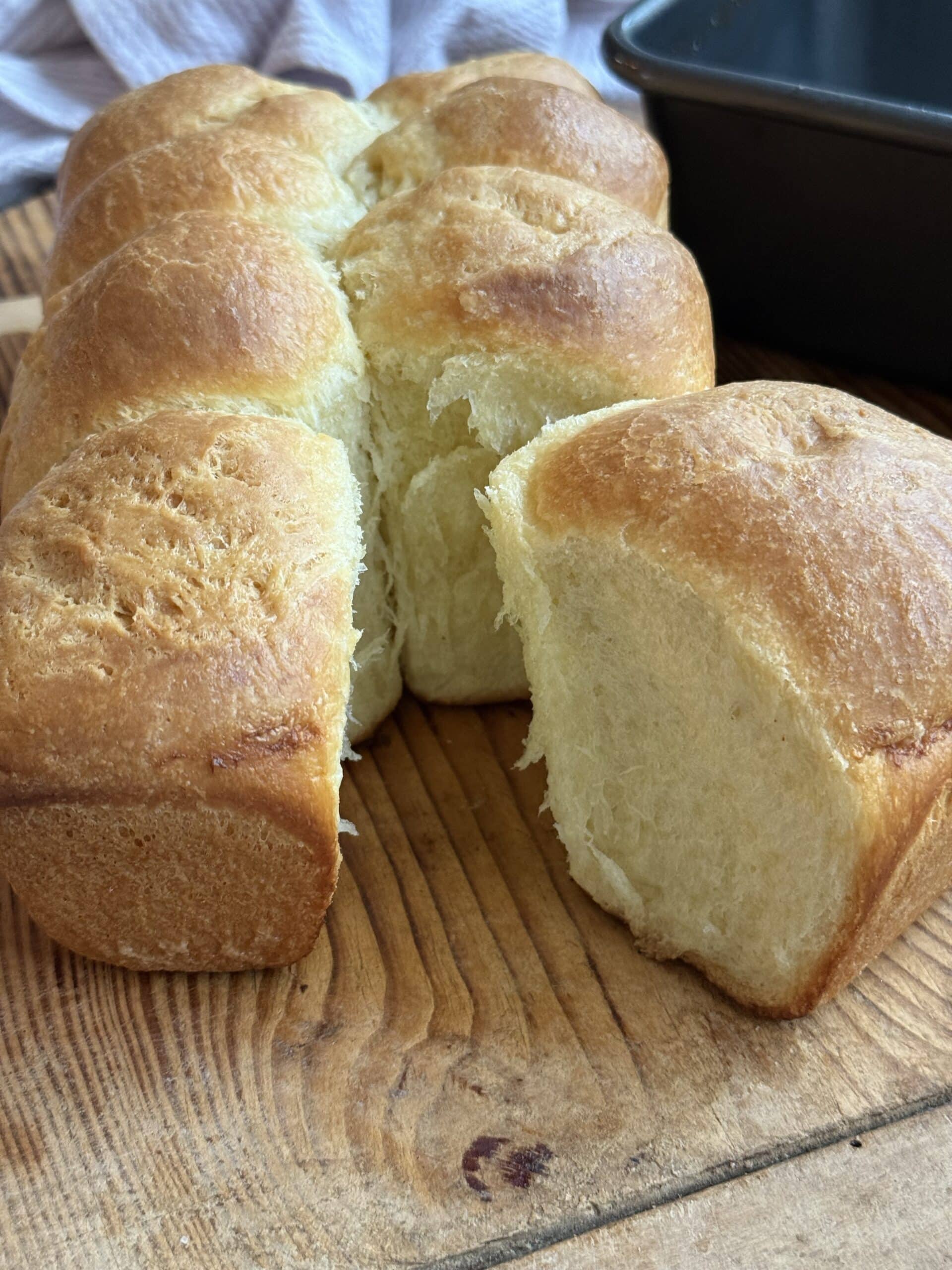
Once chilled, you shape the loaf. You can divide the dough into three equal pieces and roll them into tight balls or small logs, then nestle them side by side in a buttered loaf pan. This gives you that classic pillowy, domed top. Or you can shape the dough into one smooth log for a more traditional sandwich loaf look.
After shaping, you let the dough rise again until it reaches just above the rim of the pan. This second rise is called the final proof. The dough should look plump and feel light when you gently press it. If it springs back aggressively, it may not be fully proofed yet. If it feels very fragile and deflates easily, it may be over proofed.
Finally, you brush with egg wash and bake until the loaf is deep golden brown and the internal temperature reaches about 190°F. The kitchen will smell like butter and toast. Let the loaf cool before slicing so the crumb can set. This wait is hard, but it is worth it.

Tips, Tools, and Troubleshooting
Brioche teaches a lot about how bread behaves. The more you understand the relationship between yeast, gluten, and fat, the more confident you will feel with this recipe and any yeast dough that comes after it.
Tips and techniques
- Watch the yeast bloom
Foamy, creamy bubbles on top of the water mixture tell you the yeast is active. If the surface stays flat after 10 minutes, the yeast may be old or the water temperature may have been off. It is better to start again than risk a heavy loaf. - Let the dough knead long enough
Enriched doughs need more kneading than simple lean doughs because the butter and eggs make the structure softer. Plan for 10 to 12 minutes in the mixer after all the butter is added. Look for a smooth, shiny surface and a dough that stretches instead of tears. - Use room temperature butter
Butter that is too cold will not incorporate easily. Butter that is melted will weaken the dough. You want butter that is soft enough to press with a finger but still holds its shape. - Do not rush the rises
Yeast works at its own pace based on temperature. If your kitchen is cool, the dough may need longer than the suggested time. Go by the volume and feel of the dough instead of the clock. It should roughly double in size and feel airy. - Chill the dough thoroughly
This is one of the secrets to neat shaping. Chilled dough is less sticky and more cooperative. It also allows the flavors from the butter and eggs to mingle and deepen. - Shape with tension
When you are forming the balls or log, gently stretch the surface of the dough toward the underside so the top stays smooth and taut. This surface tension helps the loaf rise up instead of out. - Use internal temperature as a final check
Color is helpful, but a quick-read thermometer is more precise. A finished loaf should register about 190°F in the center. This ensures the inside is fully cooked while still moist.
Tools I recommend
You do not need a professional kitchen to make this bread. A few basic tools make the process smoother:
- Stand mixer with dough hook
Enriched doughs can be kneaded by hand, but a stand mixer makes the long kneading time much more manageable, especially if you have kids needing you while you bake. I'm partial to my Kitchen Aid. - 9 by 5 inch loaf pan
A standard loaf pan supports the dough as it rises and gives the bread its tall shape. Metal pans tend to brown more evenly than glass. - Instant read thermometer
Helpful for checking both the water temperature when blooming yeast and the internal temperature of the baked loaf. I love my candy thermometer - Kitchen scale
Measuring flour by weight rather than cups improves consistency. Brioche is sensitive to flour quantity. Too much flour can make the loaf dense. Kitchen Scale - Silicone spatula or bowl scraper
Useful for gathering the dough from the sides of the bowl and for shaping.
Troubleshooting
- "My dough is very sticky."
Brioche dough is naturally softer and slightly tacky because of the eggs and butter. Lightly flour your hands and work surface, but try not to add a lot of extra flour. If the dough is truly soupy, double check that you measured the flour accurately and that your butter was not melted. - "My bread did not rise much."
Check the yeast first. Was it foamy when you bloomed it? If not, it may have been inactive. Also look at your kitchen temperature. Cold rooms slow proofing. Try placing the covered bowl in a slightly warm oven with just the light on next time. - "The loaf looks beautiful outside but feels dense inside."
This can come from under proofing, over proofing, or underbaking. Under proofed dough will not have enough gas expansion. Over proofed dough may deflate as it goes into the oven. Aim for a rise where the dough has doubled in size and feels airy, and bake to 190°F in the center. - "The crust browned too quickly."
Ovens vary. If the top is browning before the inside is done, tent the loaf loosely with foil in the last 10 to 15 minutes of baking to protect the crust while the crumb finishes cooking. - "The loaf tore on the sides."
This usually means the dough expanded faster than the surface could stretch, often due to under proofing. Give the shaped loaf a bit more time in the pan next time before baking.
Variations, Substitutions, and Storage
Once you feel comfortable with the base recipe, this brioche loaf becomes a blank canvas. You can add flavors, use it in different dishes, and plan ahead for weekends or holidays.
Variations and substitutions
- Sweet breakfast loaf
Stir a handful of chocolate chips or raisins into the dough after the butter is fully incorporated. You can also sprinkle cinnamon sugar between the shaped pieces in the pan for a swirl effect. - Citrus or vanilla scented brioche
Add a teaspoon of vanilla extract or a bit of orange or lemon zest to the dough for a subtle aroma that works beautifully for holiday breakfasts. - Mini loaves or rolls
Divide the dough into smaller portions and bake in mini loaf pans or shape into round rolls. Adjust the bake time down and watch closely. Smaller pieces bake faster. - Salted honey glaze
After baking, while the loaf is still warm, brush the top with a little melted butter and honey and sprinkle with a pinch of flaky salt for a sweet and salty finish. - By hand instead of mixer
You can knead this dough by hand, but expect it to take longer and to feel messy at first. A bench scraper helps bring the dough together as you knead. Stop when the dough is smooth and elastic.
Serving and storage
Food safety
Because this bread contains eggs and butter but relatively low moisture, it is safe at room temperature for several days if wrapped properly. If you live in a very hot or humid climate, use your judgment and freeze portions if needed.
Serving ideas
This loaf is wonderful simply sliced and served with butter or jam. It also makes excellent French toast, especially if the bread is a day old. You can use it for ham and cheese sandwiches, tea sandwiches, or as the base for bread pudding.
Everyday and holiday use
For everyday meals, slice and serve with soups, salads, or eggs. For holiday tables, place the sliced loaf on a board with softened butter, jam, and maybe a little honey. It looks beautiful and invites people to linger.
Storing at room temperature
Once completely cool, store brioche in an airtight container or wrapped well at room temperature for 2 to 3 days. Avoid the refrigerator, which can dry bread out more quickly.
Freezing
For longer storage, wrap the loaf tightly in plastic wrap, then in foil, and freeze for up to 2 months. You can freeze it whole or in slices. To serve, thaw at room temperature and warm in a low oven for a few minutes to refresh the texture.
Recipe FAQs
These questions are written with baking science in mind, especially for home bakers who want to understand what is happening in the bowl, not just follow instructions.
Brioche bread is an enriched bread, which means the dough includes eggs and butter in addition to the usual flour, water, yeast, sugar, and salt. The extra fat and protein from the eggs and butter make the crumb softer and more tender than standard sandwich bread. It is somewhere between a classic loaf and a pastry, which is why it tastes so rich and works well for both savory and sweet uses.
It is more involved than a simple no knead loaf, but it is very doable if you take it step by step. The main differences are the longer kneading time, the gradual addition of butter, and the need for chilling. If you can follow a recipe and have a little patience, you can learn how to make brioche bread at home. The dough will feel sticky at times, but that is normal for an enriched recipe.
Eggs and butter are what make this bread feel special. The eggs add structure, color, and richness. The butter adds flavor and softens the crumb. From a science perspective, the fat coats some of the gluten strands, which shortens them slightly and makes the bread tender instead of chewy. That is why you knead the dough first to build strength, then add the butter slowly so you do not weaken the structure too early.
Chilling gives you two advantages. First, it firms the butter inside the dough, which makes the dough easier to handle and shape. Second, it slows down the yeast and allows flavor to develop more fully. Enzymes continue to work in the cold, breaking down starches into sugars that feed the yeast and improve the taste of the finished loaf. Skipping the chill can make the dough harder to manage and can result in a less complex flavor.
Yes, but be prepared for a workout. Hand kneading enriched dough can take 15 to 20 minutes or more, and it will feel messy when you first start adding the butter. A bench scraper is very helpful for gathering the dough. You will know you are done when the dough is smooth, elastic, and pulls away from the counter cleanly. If you have a stand mixer, I recommend using it for this particular recipe, especially if you are baking with little ones nearby.
Dense brioche usually comes from one of three things: inactive yeast, under proofing, or too much flour. If the yeast did not foam during the bloom, it likely was not active enough to give a strong rise. If the dough did not double during the first rise or did not puff up in the pan during the second rise, it may have been under proofed. If you packed the flour into measuring cups instead of weighing it or spooning and leveling, the dough may have been too dry to expand fully.
Recipe

Rich, Buttery Homemade Brioche Bread
Equipment
- 1 stand mixer with dough hook. I'm partial to my Kitchen Aid. Strongly recommended for enriched dough. Brioche requires extended kneading, and a mixer makes the process manageable and consistent.
- 1 large mixing bowl Strongly recommended for enriched dough. Brioche requires extended kneading, and a mixer makes the process manageable and consistent.
- 1 Measuring Cup and Spoon Set For dry and liquid ingredients.
- 1 kitchen scale Measuring flour by weight improves accuracy and consistency, especially for enriched doughs.
- 1 9×5 inch loaf pan Supports the soft dough as it rises and bakes, giving the loaf structure and height.
- 1 Plastic Wrap or Clean Kitchen Towel For covering the dough during rising and chilling.
- 1 Pastry Brush For covering the dough during rising and chilling.
- 1 Instant read thermometer Optional. Helpful for checking doneness. Brioche is fully baked when the center reaches about 190°F.
- 1 Wire cooling racks Allows the loaf to cool evenly and prevents a soggy bottom.
Ingredients
Brioche Dough
- 4 cups 480 g all-purpose flour
- 4 teaspoons active dry yeast
- 2 tablespoons sugar
- 1 tablespoon salt
- ⅔ cup warm water about 110°F
- 5 large eggs
- 11 tablespoons butter (salted) at room temperature, cut into pieces
Egg Wash
- 1 large egg
Instructions
- Bloom the Yeast: Warm the water to about 110°F. Stir in the sugar until dissolved, then sprinkle the yeast over the surface. Let sit for 5 to 10 minutes, until foamy and bubbly. If the mixture does not foam, discard and start again with fresh yeast.4 teaspoons active dry yeast, 2 tablespoons sugar, ⅔ cup warm water
- Make the Dough: In a large mixing bowl or the bowl of a stand mixer fitted with a dough hook, combine the flour and salt. Add the yeast mixture and eggs. Mix on low speed until the dough begins to come together, about 2 to 3 minutes.4 cups 480 g all-purpose flour, 1 tablespoon salt, 5 large eggs
- Knead: Increase to medium speed and knead for 5 to 6 minutes, until the dough looks smooth and elastic. This step builds the gluten structure needed to support the butter.
- Add the Butter: With the mixer running, add the butter a few pieces at a time, allowing each addition to fully incorporate before adding more. Continue kneading for a total of 10 to 12 minutes, until the dough is glossy, stretchy, and slightly tacky but not sticky.11 tablespoons butter (salted)
- First Rise: Transfer the dough to a lightly greased bowl. Cover tightly and let rise in a warm place until doubled in size, about 1½ to 2 hours.
- Chill the Dough: Gently deflate the dough, cover again, and refrigerate for at least 4 hours or overnight. Chilling improves flavor and makes the dough easier to shape.
- Shape the Loaf: Butter a 9×5-inch loaf pan. Turn the chilled dough out onto a lightly floured surface. Divide into 3 equal pieces and roll each into a tight ball or short log. Arrange side by side in the prepared pan.
- Final Proof: Cover loosely and let rise in a warm place until doubled and the dough reaches just above the rim of the pan, about 1½ hours. The dough should feel light and springy when gently pressed.
- Bake: Preheat the oven to 350°F. Brush the top of the loaf with egg wash. Bake for 35 to 40 minutes, until deep golden brown and the internal temperature reaches about 190°F. If the top browns too quickly, tent loosely with foil during the last 10 to 15 minutes.1 large egg
- Cool and Serve: Let the loaf cool in the pan for 10 minutes, then remove to a wire rack to cool completely before slicing.
Notes
Brioche bread is made with eggs and butter, which changes how the dough behaves compared to lean breads. The fat makes the crumb tender and rich, but it also slows yeast activity. Expect longer rise times and trust the process. Time is part of what gives brioche its flavor and texture. Butter should be soft, not melted.
Room-temperature butter incorporates smoothly into the dough and helps create a glossy, elastic structure. Melted butter can weaken the gluten network and lead to a dense loaf. If your butter is too warm, let it cool slightly before adding. Add the butter gradually for best structure.
Butter coats gluten strands. If added too quickly, it can prevent proper dough development. By kneading the dough first and adding butter in small pieces, you allow the gluten to form and then gently enrich it. This is key to achieving a soft but well-risen loaf. Chilling the dough is not optional.
The cold rest improves flavor through slow fermentation and makes shaping much easier. Chilled dough is firmer, less sticky, and holds its shape better in the pan. This step also fits well into real family schedules, allowing you to pause and bake later. Rise times are guidelines, not rules.
Temperature, humidity, and yeast strength all affect how quickly dough rises. Instead of watching the clock, watch the dough. It should roughly double in size and feel light and airy when gently pressed. Use internal temperature to confirm doneness.
Brioche can brown deeply before the inside is fully baked. The most reliable way to check doneness is with an instant-read thermometer. The center of the loaf should reach about 190°F for a fully set crumb. Let the loaf cool before slicing.
Fresh bread continues to set as it cools. Cutting too soon can compress the crumb and make it feel gummy. Allowing the loaf to cool gives you clean slices and the best texture. This bread keeps and freezes well.
Once cooled, brioche bread can be stored at room temperature for 2 to 3 days or frozen for longer storage. Slice before freezing if you want easy access to individual portions. Brioche is especially good repurposed as French toast or bread pudding once it is a day old.
Nutrition
What to Bake Next
If you enjoyed learning the technique behind this rich, buttery loaf, there are a few other from scratch recipes on the site that build similar confidence in the kitchen.
Our Homemade Cinnamon Rolls with Heavy Cream are another reader favorite that use enriched dough to create a soft, tender texture. They are perfect for weekend baking, holiday mornings, or anytime you want something special without relying on store bought shortcuts.
For a dessert that feels elegant but is surprisingly simple, try our Flourless Chocolate Cake. It relies on careful mixing and temperature, much like brioche, and is a wonderful example of how understanding technique leads to consistently good results.
You can also browse our full Breads and Baked Goods collection for more recipes designed to teach, encourage, and help you bake with confidence using real ingredients.
👩🏻🍳 Follow Us!
About Kendra Boettner
Hi, I'm Kendra, wife, mom of three, and the baker behind The Baker's Table. After 20+ years baking at home, including time working in professional kitchens, these are some of my favorite recipes I've learned along the way.
🧁 Want to see more? Join me on Instagram, Facebook, and Pinterest
1️⃣ My 'The Best No Bake Oatmeal Cookie" was my #1 recipe in 2025! Easy and kid friendly!
📋 Here are Kendra's favorite recipes
🍪 Or start with some of our readers' favorites:
- The Best Easy Pie Crust Recipe (Flaky and Foolproof)
- The Best Homemade Brownies (Chewy, Fudgy!)
- Lemon Meringue Bars with Swiss Meringue
- Cake Pucks Made Easy (Cake Pops without the Sticks)
- No-Bake Chocolate Mousse Pie with Oreo Crust
📋 Browse all of my recipes
🔗 The Baker's Table is Featured in:
🔗 Visit the About Me page to learn more about Kendra, Eric, and The Baker's Table!


Comments
No Comments